On July 24, Wilderness Watch and allied groups filed a motion requesting that the court stop all road building activities in the Izembek Wilderness and National Wildlife Refuge while our recently filed lawsuit makes its way through court.
Our new lawsuit, filed on July 22 in U.S. District Court, claims the Army Corps violated the Clean Water Act and other laws when issuing the main permit needed to build the 13-mile road through the protected tundra and wetlands of the world-renowned Izembek Wilderness and National Wildlife Refuge in Alaska. Another lawsuit—filed in November 2025 and awaiting a decision—argues that the Secretary of the Interior violated an array of laws when trading away Izembek land to make way for a privately owned road on the narrow Izembek Isthmus.
If built, the road through the Izembek Wilderness would be catastrophic for the critters that live there and would essentially cut the 307,982-acre Izembek Wilderness in two.
Located near the tip of the Alaska Peninsula in southwest Alaska, the Izembek National Wildlife Refuge—over 95 percent of which is designated Wilderness—is a remote stretch of land where a quarter-million migratory birds, including virtually the entire population of Pacific black brant, congregate each fall.
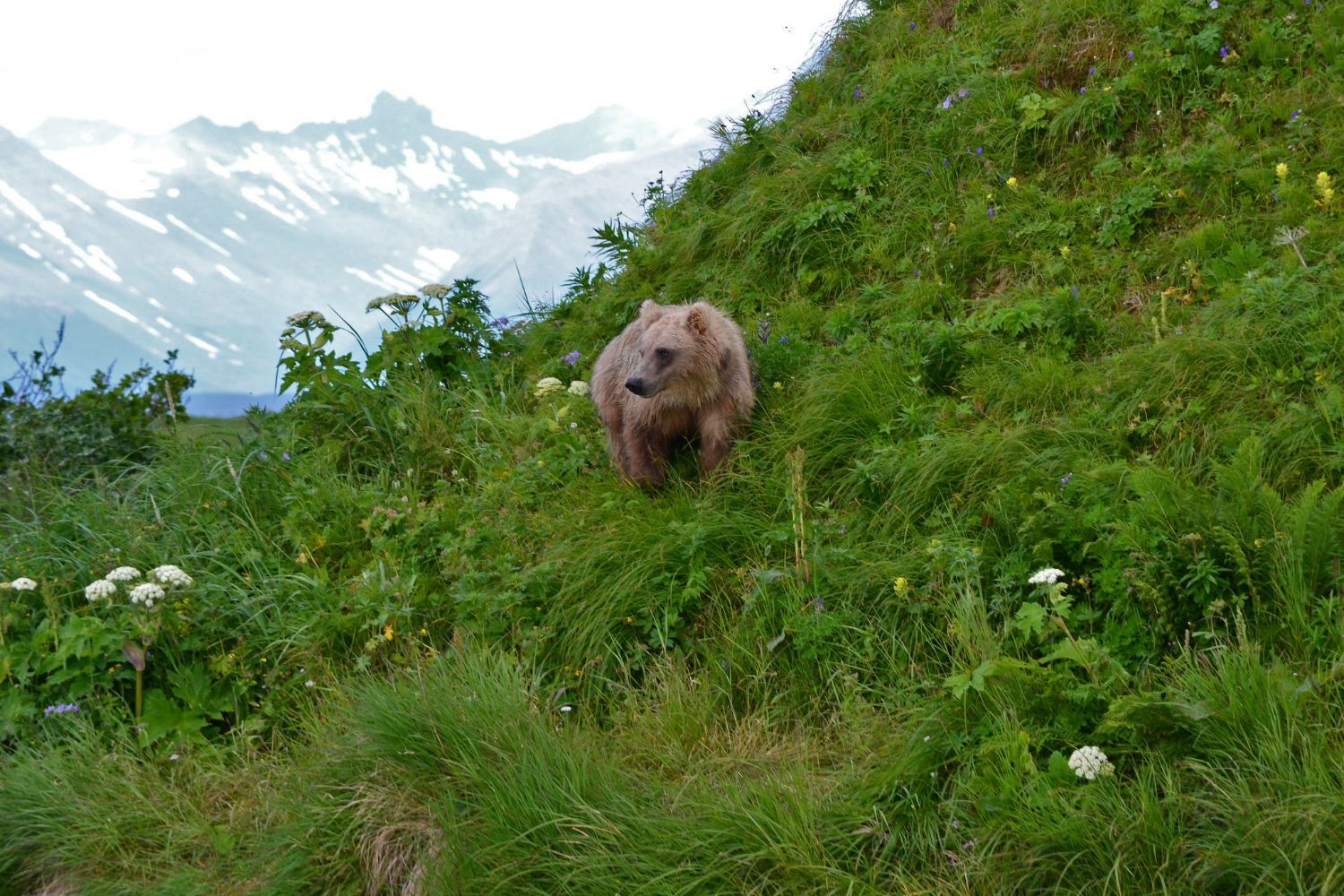
Nearly 7,000 caribou make their annual trek into the Wilderness where they overwinter, and hundreds of sea otters swim with their young in the Izembek Lagoon, occasionally in the vicinity of migrating orcas, gray whales, minke whales, and Steller sea lions. Massive brown bears—as many as nine per mile—lumber through Wilderness streams during peak summer salmon runs.
Wilderness Watch is joined on this new lawsuit by Friends of Alaska Wildlife Refuges, the National Wildlife Refuge Association, Alaska Wilderness League, and Sierra Club. Law firm Trustees for Alaska is representing our coalition.
“It makes no sense to issue permits and begin road construction while the legality of the land swap, which gave away refuge lands for purposes other than conservation is being challenged in court,” said Marilyn Sigman, president of Friends of Alaska National Wildlife Refuges. “These wilderness lands were protected as a national wildlife refuge because of their extraordinary value for the conservation of migratory birds, most notably Pacific black brant, salmon, brown bears, and a caribou herd as well as to local subsistence harvests.”
The proposed road threatens the health of a vast and thriving ecosystem vital to animals like caribou and migratory birds like Brant and Emperor geese. The land trade itself endangers the integrity and health of national park, refuge, and designated wilderness areas across Alaska by allowing a political appointee to trade away federal conservation lands to private interests without transparency and oversight. Interior has repeatedly found that a road would cause long-term and irreparable damage to Izembek’s unique and ecologically important habitat.
"The outstanding wilderness and wildlife values of Izembek must be protected from the planned road construction until the merits of our lawsuit can be heard in court,” said Kevin Proescholdt, conservation director for Wilderness Watch. “These values are of national and international significance and should not callously be tossed aside by the Trump administration.”
“Interior bypassed Congress when making a backdoor deal that put the heart of the Izembek Refuge in private hands, and now the Army Corps has handed out a permit giving the greenlight for bulldozing through an area essential to the health of Izembek,” said Michelle Sinnott, a senior staff attorney with Trustees for Alaska. “Our lawsuits aim to hold this administration accountable for the litany of federal laws it trampled over in order to trade away irreplaceable public lands for a road, and today’s motion asks the court to stop on-the-ground harm while those cases are heard.”
A road from King Cove to Cold Bay has been considered many times for commercial and medical reasons. The proposed privately owned road has an untold price tag, which could come from public funds and will likely be impassable or dangerous to drive during the same harsh weather conditions that impact air travel. A federally funded hovercraft was provided to the King Cove community as a viable alternative to a road, and it successfully completed all requested medical evacuations during its operation. Despite performing how it was intended, the hovercraft operation was suspended in 2010 and sold.
Better alternatives exist for providing safe transport for those experiencing medical emergencies from King’s Bay to the airport in Cold Bay that don’t compromise protection of the Izembek Wilderness and National Wildlife Refuge.
While we wish we didn’t need to file these lawsuits, we are deeply grateful for all of you who have written letters and provided support to protect the Izembek Wilderness over the years. Together, we’re going to score a win for Wilderness and its wildlife! |
|
Help us protect Izembek and Wilderness around the country. A generous member has pledged to DOUBLE all first-time donations up to $30,000 this year. |
|