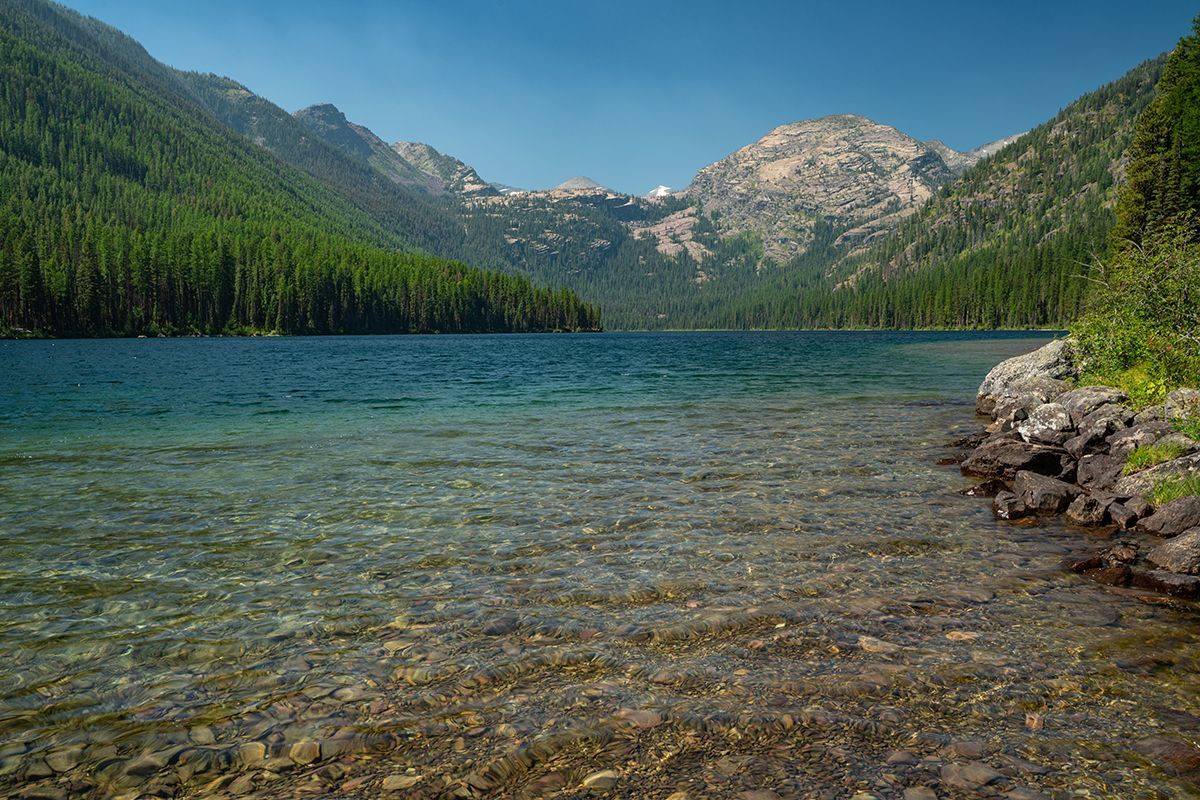
In good news for the Mission Mountains Wilderness in Montana, this spring the Forest Service withdrew its controversial Mid-Swan Landscape Restoration and WUI Project final environmental impact statement and draft record of decision. More than 14,000 of our members and supporters opposed the 15-year project, which included widespread habitat manipulation in the Wilderness, and Wilderness Watch filed a formal objection in 2021. The project also proposed 17 miles of new roads and almost 18,000 acres of commercial logging across a 272-square-mile area of the Flathead National Forest, between the Swan Mountains Crest and the Mission Mountains Wilderness. The Forest Service proposed to ignite fire from helicopters across 5,887 acres of the Mission Mountains Wilderness and 7,800 acres of recommended Wilderness, and to plant whitebark pine trees across 1,860 acres of Wilderness. The proposed activities would have violated fundamental tenets of the Wilderness Act and Wilderness as a place free from intentional human intervention. And, this massive landscaping project threatened Wilderness beyond the Mission Mountains due to its potential to set a dangerous precedent. The project used the tired and inaccurate argument that burning and logging is needed to reduce wildfire risk to homes. At the same time, it failed to address climatic conditions as the underlying driver of larger fires, or to help protect property or lives since scientific studies show home ignition is determined by home flammability itself, not in forests far from communities. Planting trees in Wilderness, regardless of how well intended, also violates the letter and spirit of the Wilderness Act. Wilderness Act author Howard Zahniser put it best when he implored us to be “guardians not gardeners.” Our objection noted that planting super trees would not only manipulate the Wilderness, but likely wouldn't work. Fungi like rust are highly adaptive and planting trees resistant (vs. immune) to blister rust would likely select for rust that can overcome trees thought to be rust resistant, leading to potentially further endangering whitebark pine across the landscape. In a Forest Service press release announcing the project's withdrawal, the agency stated, “Spatial delineation of these activities relied on remote sensing data – satellite information. On-site verification of the proposed project activities revealed that conditions on the ground would allow for only partial treatment of the landscape and substantial logistical challenges.” The proposal was a slap in the face to Wilderness, and we’re glad to see that the agency has abandoned it. We're guardedly optimistic, as it remains to be seen what projects the Forest Service proposes in its place, and we stand ready to protect the Mission Mountains Wilderness again. Thank you to everyone who spoke up for the Mission Mountains Wilderness! |