We’re sharing a recent paper titled, “Wilderness, Indigenous land zones and regionality in North American forests,” which appeared in the January 2026 issue of a peer-reviewed ecocentric journal called The Ecological Citizen.
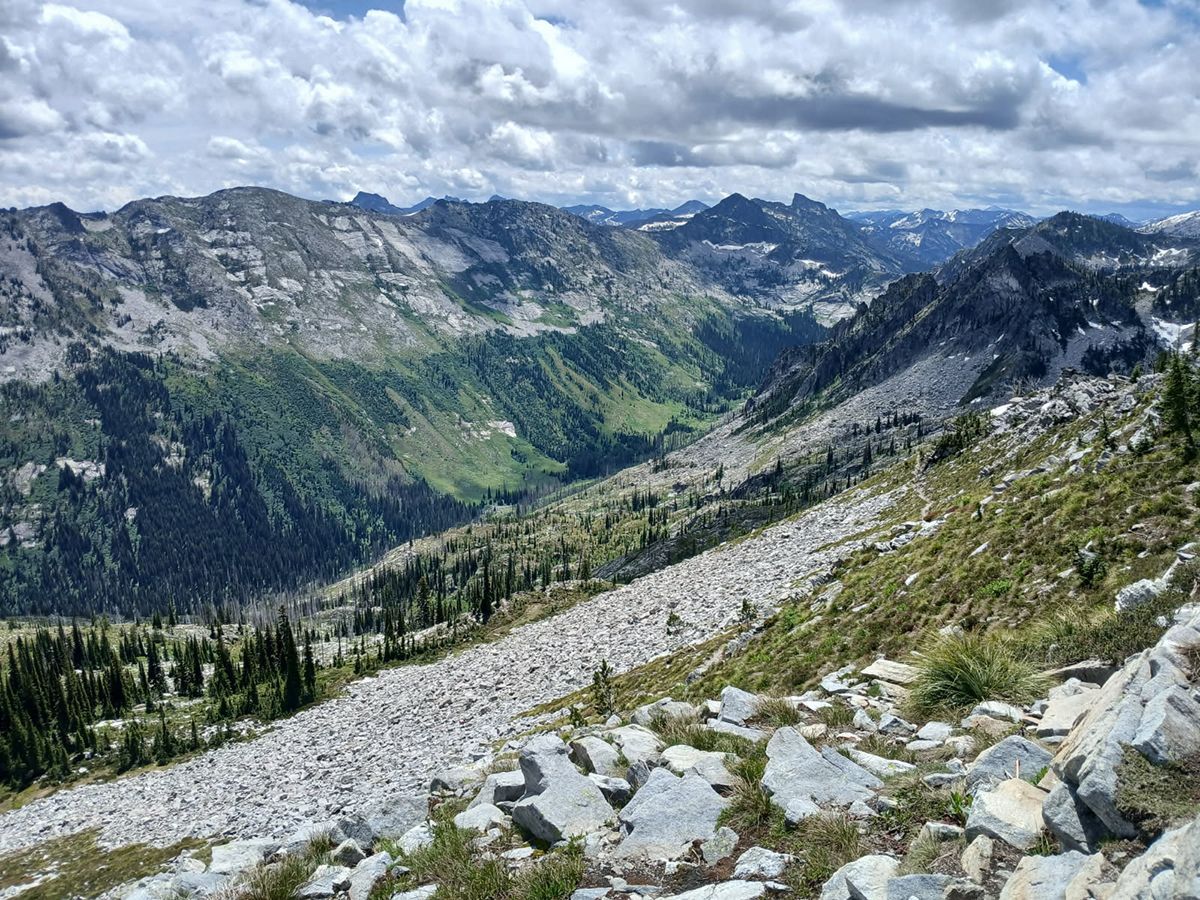
The paper was written by Edward K. Faison, a forest ecologist, and Nohham R. Cachat-Schilling, an Indigenous scholar and Medicine Elder. We believe it contributes an important—and often missing—perspective to current conversations about wilderness conservation and Indigenous land stewardship. A common critique is that Wilderness is a purely European construct that is inherently incompatible with Indigenous relationships to the land. This paper directly challenges that assumption. Drawing on Indigenous languages, land classifications, archaeology, and historical evidence, the authors show how many Indigenous nations recognized distinctions between settled lands and places where people visited but did not remain—concepts that closely parallel the language Congress incorporated in the 1964 Wilderness Act. Throughout the paper, passages from the Wilderness Act are used to illustrate Indigenous concepts, such as the Nimiipuu understanding of the Bitterroot high country and the Algonquian idea of táuohkômuk—a term that has been loosely translated to mean “wilderness,” referring to open or uncultivated lands where people might visit, hunt, gather, seek spiritual renewal, or hold ceremony but not permanently inhabit or substantially alter.
These examples illustrate that Indigenous relationships to land were diverse and challenge the notion that Wilderness is solely a colonial, or anti-Indigenous, construct. The paper challenges broad generalizations that treat Indigenous cultures as monolithic, arguing instead for a more careful, regionally-grounded understanding of land use, stewardship, and history.
The paper, ”Wilderness, Indigenous land zones and regionality in North American forests,” is a thoughtful contribution that broadens the conversation, and we urge you to read it. |
|
Help us protect Wilderness around the country. A generous member will DOUBLE all first-time donations up to $30,000 in 2026. |
|