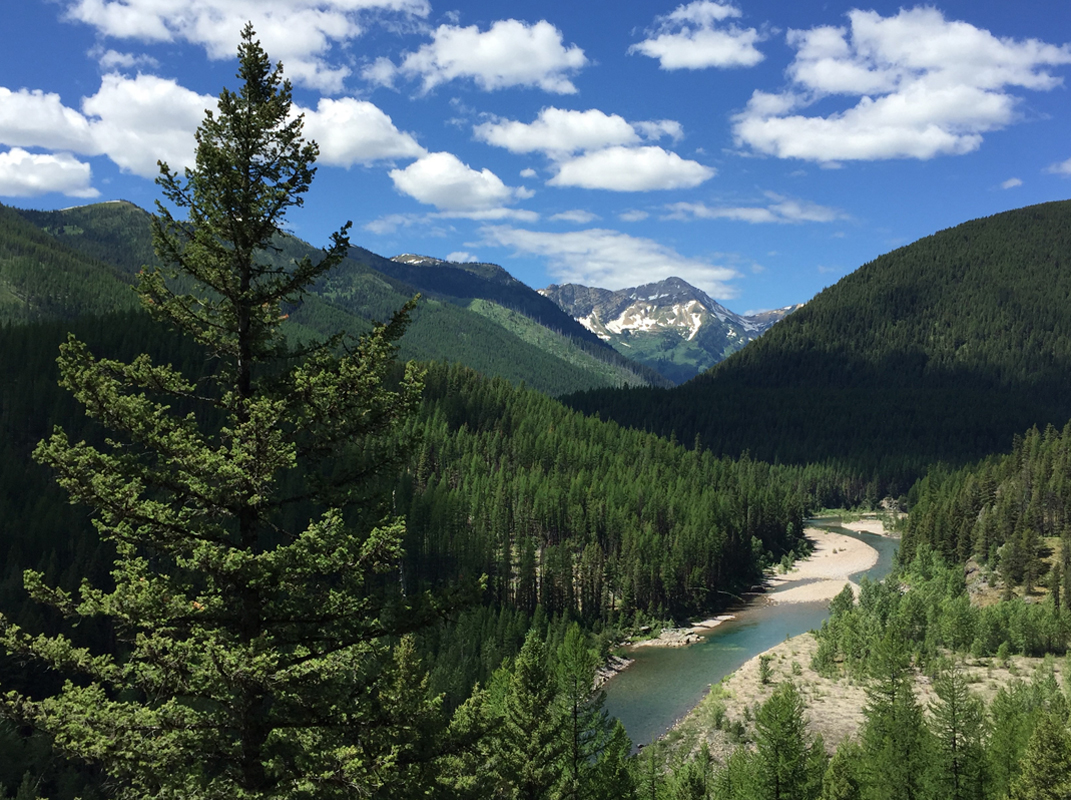
Roughly 87 miles of the 219-mile Flathead Wild and Scenic River System runs through the gorges and valleys of one of America’s most celebrated Wilderness areas—the 1.6 million-acre Bob Marshall Wilderness Complex in Montana. The “Bob,” as it’s known, consists of the Bob Marshall, Scapegoat, and Great Bear Wildernesses. All of its native wildlife—including iconic native species like grizzlies and wolves—still live here. On a summer weekend, much of the Wild and Scenic River outside the Wilderness is flooded with anglers and floaters, often accompanied by guides and outfitters, drifting on the water or camping and fishing along the banks on both the Flathead National Forest and Glacier National Park. The Forest Service is proposing new regulations and increased monitoring of recreation use on the Flathead River, including the 87 miles that run through Wilderness. However, the agency’s proposed actions fall far short, failing to acknowledge current recreation impacts or address the significant threats to Wilderness and wildlife already occurring in one of America’s preeminent wild places. That’s why we need you to speak up by March 12 for the Flathead Wild and Scenic River and the Bob Marshall Wilderness Complex! The Flathead Comprehensive River Management Plan proposes some good actions, including: prohibiting parking and car camping on gravel bars; requiring containment of human waste within 200 feet of the river’s edge; prohibiting drones; and noise level and group size limits. However, the permits for floating are proposed to be unlimited in number and appear to be in excess of historic use numbers. The Environmental Assessment (EA) seems to allow dramatic unlimited increases in use overall, including unspecified increases in actual outfitting use. The document also fails to provide information on impacts to Wilderness due to current recreation use, including the displacement of wildlife and waterfowl caused by rampant overuse, such as the endless stream of outfitting and guide services profiting from tours through the river corridor, and low-flying aircraft overhead. In just one example, the airstrip in Schafer Meadows results in multiple daily flights over the Middle Fork of the Flathead in the Great Bear Wilderness. One can only imagine the impact a busy flight pattern is having on wildlife in the Great Bear Wilderness. Also, dramatic increases in angling in the South Fork in the Bob Marshall Wilderness may be contributing to a steep decline in bull trout numbers. Hungry Horse reservoir allows anglers to keep (kill) one threatened bull trout (within a specific window of time), with catch and release also allowed for Hungry Horse reservoir, as well as Lake Koocanusa and South Fork Flathead River. Emergency provisions to protect bull trout were instituted in 2025 by Montana Fish Wildlife and Parks, but it may be too little too late. Further, the agencies prefer to blame beaver dams, a natural part of bull trout habitat, rather than the recognized dramatic increase in floating and angling pressure on the South Fork. No alternatives are considered in the EA other than what the agencies propose. Also, since the original plan established no limits in 1980, the EA treats user capacities as recommendations and not mandatory limits. As such, the plan repeats mistakes of the past that were made when the use was much less than today. The Bob Marshall Wilderness Complex stands as one of the flagship Wilderness areas in the National Wilderness Preservation System—the 3 percent of land in the Lower 48 where native wildlife can still find refuge from the pressures of ever-expanding human civilization. For the sake of the Wilderness and its wildlife, limitations on current uses should be considered, and an analysis of impacts should expand beyond the river to include the entire corridor a quarter mile on both sides of the river. While the Forest Service is taking preliminary steps toward limiting impacts and gathering data regarding recreation overuse, if it is truly interested in preserving the health of the Flathead River system, the agency should take this opportunity to cap use at a number more in line with the amount of use at Wild and Scenic designation in 1976, research the impacts recreation is already having on Wilderness and wildlife, and act quickly to address the problems. Whether it is boats, planes, pack stock, or hikers, excessive recreation use will inevitably harm habitat and displace animals that rely on Wilderness in a world growing increasingly claustrophobic.
Comments are due Thursday, March 12, through the Forest Service’s website: https://cara.fs2c.usda.gov/Public//CommentInput?Project=56536
Please speak in your own words, but consider raising the following points:
- Habitat protection on the Flathead River is not something that can wait, and the Bob Marshall Wilderness Complex deserves immediate action in order to preserve the wild.
- The Forest Service needs more scientific data informing user capacity numbers. In the interim, numbers need to be capped at levels that reflect the use at Wild and Scenic designation in 1976.
- Immediate action is critical to address wildlife displacement in Wilderness caused by current recreation numbers.
- Immediate action is needed to reduce impacts to the Middle Fork of the Flathead caused by flights in and out of Schafer airstrip in the Great Bear Wilderness.
- The vast majority of use on the wild rivers should be allocated to public use, and commercial outfitting and guiding should be limited to only the level that is “necessary and proper” as required by the Wilderness Act.
- Data collection and analysis needs to include the entirety of the Flathead River corridor, a quarter mile on both sides of the river.
- Immediate action is needed to bring the impacts along the South Fork of the Flathead into compliance with the area’s Wilderness Management Plan and to protect bull trout.
|
|